
The infrastructure decisions made at the structural level determine what is possible at the operational level. A frame sets boundaries. It defines what can be built inside it, how tall it can stand, how services are routed, and how the facility responds as workloads change. In the GCC’s fast-moving data center market, where AI adoption is driving rack densities and cabling requirements that most facilities were never designed to handle, those structural decisions carry more consequence than ever.
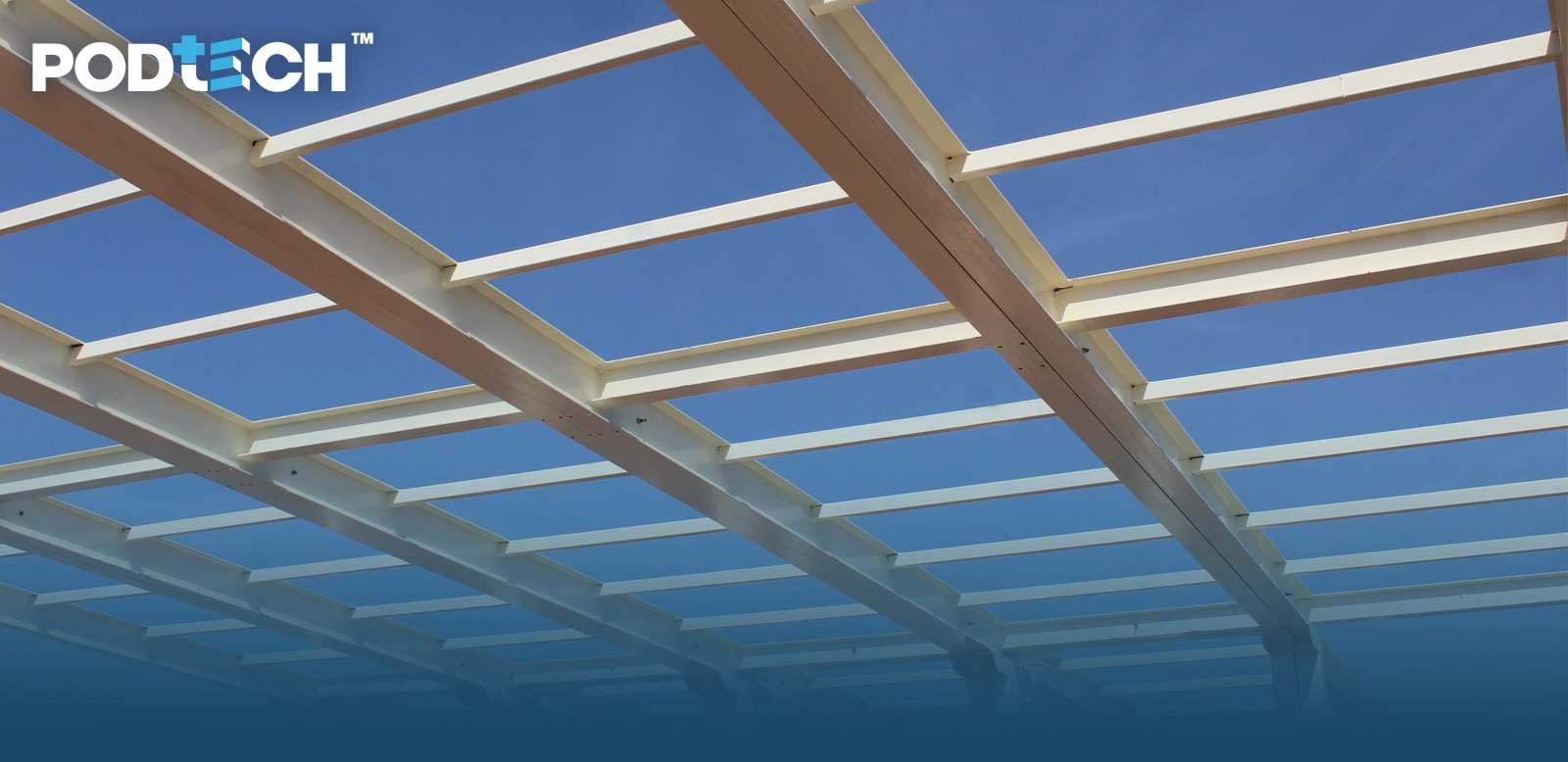
PodTech’s modular steel frame was designed with that reality in mind. It is a purpose-built structural system with a specific capability that standard shipping container-based modular data centers generally struggle to provide. Adjustable internal height.
A PodTech podule can be specified with internal clearance anywhere between 2.5 meters and 3.5 meters. That single engineering decision is what makes PodTech’s prefabricated data center infrastructure genuinely flexible for modern workloads, and genuinely different from the alternatives available across the Middle East market today.
What Container-Based Modular Data Centers Can and Cannot Do
Container-based modular data centers can be cut and connected to form larger footprints, extending a deployment’s length and width to fit more racks and additional equipment. This works well for sites where land is available and horizontal growth is effective.
The constraint is vertical expansion. A standard ISO shipping container provides an internal clearance of approximately 2.38 meters. High-cube containers reach around 2.7 meters to meet global freight logistics standards, to keep the shipping of these units simple. However, there is a lot that a data center can achieve with more height. Lack of vertical flexibility means, limited room for structured cabling, overhead MEP routing, and the service separation that high-density deployments demand.
Modifying the height of a shipping container involves considerable structural complexity and is rarely done in practice. Operators that work within the constraints of regular containerized modular data centers accept compromises in how cabling is managed, how services are routed, and how much overhead space remains for future changes.
The Height Advantage: Adjustable from 2.5 m to 3.5 m
PodTech’s steel frame is not derived from a shipping container. Because it is purpose-built through a bolted modular frame construction system, internal height is a design variable rather than a logistics constraint.
A PodTech podule can be configured with internal clear height anywhere between 2.5 meters and 3.5 meters. The lower end matches the clearance of a high-cube container. The upper end provides a full additional metre of usable overhead space, and in practice that difference is significant.
Modern data center deployments, particularly those running AI inference workloads, GPU clusters, or telecoms edge infrastructure, carry a considerably higher volume of fibre optic and electrical cabling above and between racks than standard enterprise compute environments. At 2.5 meters of internal clearance, there is limited room for structured overhead cable trays, cooling distribution pipework, fire suppression systems, and the cable runs themselves to coexist without compression. At 3.5 meters, these systems can be routed, separated, and accessed properly.
Cable separation is not a minor operational detail. Power and fiber optic cables routed in close proximity generate electromagnetic interference that affects signal integrity. Structured overhead routing, with physical separation between power and data runs, requires clearance to implement correctly.
The additional height that PodTech’s adjustable frame provides is not surplus space. It is the margin that makes proper cable management infrastructure achievable. For operators deploying edge nodes, AI processing facilities, or mixed-workload colocation infrastructure across the GCC, that margin is the difference between a flexible data center design that accommodates the cabling reality of modern compute and one that constrains it.
Factory-Built, Field-Ready
PodTech’s modular steel frame is assembled in a factory setting, where the frame sections are precision-cut, bolted together under controlled conditions, and integrated with the raised floor deck before a unit leaves the factory. Structural quality checks, including validation to Tier III and IV standards, are completed in the manufacturing environment. A podule arrives on site as a tested, validated asset ready for systems integration.
This factory-first approach is central to how PodTech delivers adjustable height as a repeatable capability rather than an engineering exercise on each project. The bolted construction system allows height to be specified during manufacturing, with dimensional precision maintained throughout, because the frame geometry is designed to accommodate variation from the outset.
Standard Builds and Custom Configurations
PodTech’s modular frame supports both standard validated configurations and fully custom builds. Standard podules are pre-integrated with IT racks, In Row and condenser cooling with full hot and cold aisle containment, main LV panel, modular UPS with inbuilt battery backup, PDU, DCIM monitoring, and an integrated fire protection system. They are ready for rapid deployment and available in configurations tested to the same Tier III and IV standards as custom builds.
Custom configurations use the same bolted frame methodology to meet specific site requirements for length, width, or height, without requiring a structural redesign each time a deployment deviates from standard dimensions. This is what makes PodTech’s approach genuinely bespoke data center infrastructure: the same platform delivers both standard speed and custom precision.
The G+1 vertical stacking capability adds a further dimension. Where ground footprint is limited, two podules can be stacked, doubling rack density on the same physical area while maintaining clearance standards across both levels.
Vertical Space and the Cable Infrastructure It Makes Possible
The overhead zone inside a data center is where fiber optic cabling, electrical power runs, cooling pipework, and fire suppression headers all share the same space. In fixed-height modular data center construction, that zone is often too shallow to route these systems properly, forcing operators into certain compromises: increasing the risk of improper bend management or tighter routing constraints of fiber optic cables, power and data runs without adequate physical separation, and reduced flexibility and higher complexity. The consequences show up as signal degradation, EMI-related issues in copper cabling systems, and cabling that becomes progressively harder to manage as density grows.
PodTech’s flexible data center design addresses this directly. With internal clearance configurable up to 3.5 meters, the modular steel frame provides enough overhead depth to route fiber optic and electrical cables in properly separated, structured cable trays from day one. For GCC operators running high-density compute, AI inference workloads, or telecom edge infrastructure, data center infrastructure is expected to accommodate the intensity of the compute needed for the coming future. A structure built around the cabling reality of the workload, not the other way around.
Infrastructure Sized for the Workload
The GCC’s data center market is accelerating on several fronts simultaneously. AI adoption, 5G densification, and the growth of distributed edge infrastructure are creating demand for compute capacity in configurations that standard container-based modular data centers were not designed to serve.
PodTech’s adjustable-height steel frame addresses a specific, practical gap in what the market currently offers: the ability to specify internal clearance based on the cabling, cooling, and density requirements of the actual workload. Every PodTech podule begins with a frame built to the deployment’s requirements. The height is specified before manufacturing begins, the structure is validated before it leaves the factory, and the finished unit arrives ready to operate at the clearance level the workload demands.
For infrastructure operators who have encountered the ceiling of what fixed-height modular data center construction can offer, that distinction is not abstract. It is the operational reality of the next deployment.
Speak with PodTech’s engineering team about how the modular frame can be configured for your specific site and workload requirements.
PodTech Data Center designs, builds, and operates advanced modular data center solutions across the GCC, engineered to Tier III and IV standards, manufactured at our facility in UAE, and built for the flexibility, scalability, efficiency, and sustainability that modern compute demands require.