
Quick Overview
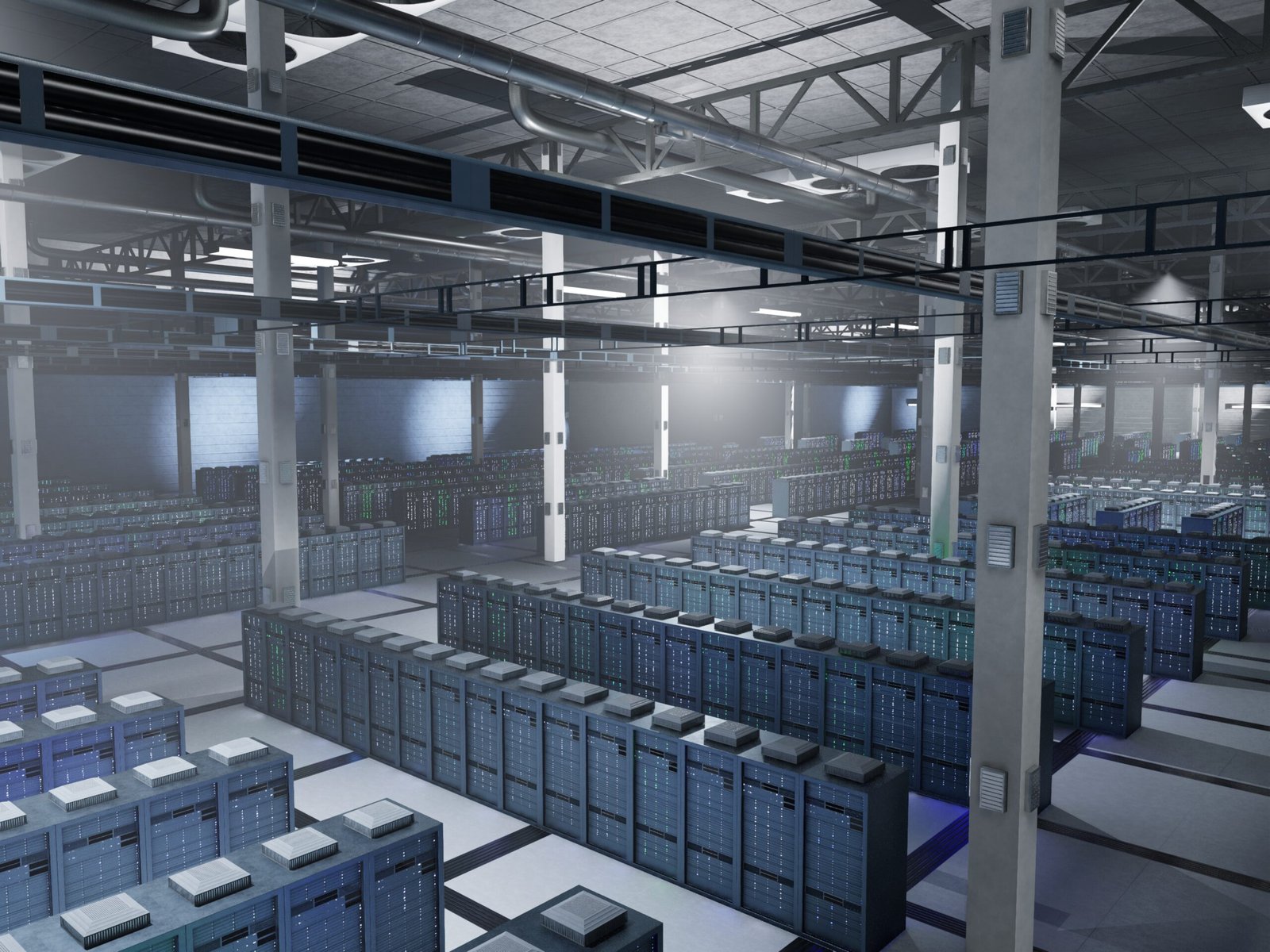
The modular data center is one of those data centers where the building components or power skids, cooling components, IT modules, or complete containerized data halls are preassembled in a factory and then shipped for assembly at the site of deployment. As against 24 to 36 months of “stick-built” construction, a typical timeframe for modular data centers goes around 6 to 8 months, with some even deploying complete containerized AI pods within weeks (highly dependent on lead times for internal equipment).
- Deployment timeline: 6-8 months for modular builds vs. 24-36 months for stick-built construction
- Data Center form factors: Containerized, skid-mounted, and prefabricated data halls
Why This Question Matters Right Now
Grid connection queues in parts of Europe and the Middle East now stretch past seven years. Transformer lead times exceed two years in some supply chains. Meanwhile, AI training clusters need megawatts of capacity activated in months. The difference between needs and infrastructure construction is the only reason modular data centers have progressed from a niche edge computing facility to the standard for capacity deployment in 2026.
This blog explains what a modular data center is, the various types of modular data centers, a comparison of economics with a traditional build, future directions in modular data centers involving liquid cooling and AI-density racks, and the most frequently asked questions buyers raise before deploying one.
What Is a Modular Data Center?
Modular data centers refer to an infrastructure made up of pre-engineered and pre-manufactured modules and not individual pieces being assembled at a site, which are then delivered to a destination where they are integrated into a functioning data center. The modules have already been tested prior to their shipment from the factory and thus eliminate many of the potential bottlenecks during conventional building processes, such as weather conditions and labor shortages.
There are two main categories of the modules:
- Passive part: switchgear, UPS systems, transformers, and distribution equipment, either fully enclosed/mounted on an open structural skid, computer room air handlers, chillers, or, increasingly, direct-to-chip and immersion liquid cooling distribution units.
- Active part: the server racks, networking, and compute hardware itself, housed in a standardized enclosure.
PodTech deals with the passive part of a data center, providing end-to-end infrastructure solutions for data centers.
Some data centers have a semi-prefab design where power, cooling, and a traditional IT hall form the combination. Some data centers use full prefab designs whereby power, cooling, and IT are all factory-built systems and join together using an already-prepared foundation.
Types of Modular Data Centers
The market has conflicting terms for such data centers; containerized, skid-mounted, portable, pod-based, and prefabricated.
Containerized Data Centers
Data center facility housed within an ISO certified shipping container, usually 20 feet or 40 feet long. This is one of the more common types of modular data centers; they are weather-resistant and can be transported via road, rail, or sea and are capable of being integrated with IT load, power, cooling, etc. in a single unit. Containerized units are the go-to choice for edge deployments, disaster recovery sites, and remote or temporary locations where construction simply isn’t practical.
Skid-Mounted Systems
Power or cooling equipment pre-assembled onto a structural steel frame rather than enclosed in a container. Skids are typically paired with a separately built (or pre-existing) IT hall and support larger capacities, from 1 MW up to 2 MW per unit, than a containerized format can typically house. Because the equipment sits exposed on the skid, this approach is used for power and cooling infrastructure, not for sensitive IT hardware.
Prefabricated Data Halls
Fully enclosed, factory-built rooms that house IT and network equipment, often attached to or integrated within a larger campus. These give operators a way to add capacity in discrete blocks without re-engineering the entire facility each time, and they’re increasingly the format hyperscalers use to phase capacity additions on existing sites.
Micro Modular Data Centers
Small and modular units that are usually less than 250 kW are intended for edge computing applications in places such as retail shops, telecom towers, manufacturing, etc., wherever low-latency demands prevent traffic from being sent back to the central facility.
Modular vs. Traditional Data Center: Side-by-Side
| Factor | Modular | Traditional |
| Deployment time | 6–8 months (weeks for single containerized pods) | 24–36 months |
| Cost predictability | High, fixed factory pricing | Lower, exposed to site and labor variance |
| Scalability | Add units incrementally as demand grows | Requires re-engineering or new construction |
| Site flexibility | High, can relocate or redeploy | Fixed to original site |
| Best fit | Edge, AI clusters, capacity under time pressure | Large, long-horizon, single-site campuses |
Why Modular Adoption Is Accelerating in 2026
Three forces are driving the shift from traditional construction to modular delivery this year.
1. Grid and Equipment Bottlenecks
Grid connection timelines in several major markets, including parts of the EU and MENA, now run 7 to 13 years. Medium and high-voltage switchgear and transformers face lead times measured in years rather than months. Modular manufacturers can absorb this risk by batch-ordering long-lead components and holding pre-integrated inventory, which is one of the few practical ways operators can still hit aggressive go-live dates.
2. AI Compute Demand
In 2024, data centers were consuming about 415 terawatt hours of electricity globally, but this number is expected to almost double to 945 terawatt hours by 2030, per the International Energy Agency. The hyperscalers invested a capital of more than $320 billion in 2025. Clusters for training require availability of facilities in months, as opposed to years through the conventional approach.
3. Rising Rack Density
AI and HPC workloads are pushing rack densities well past 40 kW, a level conventional air cooling cannot support without breaching energy budgets. This has made liquid cooling, direct-to-chip, and immersion standard design features rather than premium options, and modular vendors have moved fastest to integrate factory-built cooling distribution units into their standard offerings.
How the Deployment Timeline Actually Works
A realistic modular project breaks down into four phases.
- Design and Procurement (4-12 Weeks): Defining power density, cooling system, and module architecture; ordering long-lead items.
- Factory Fabrication (10-12 Weeks): Structure assembly, installation of power and cooling systems, cable management, and factory acceptance testing before shipping the module.
- Site preparation (parallel, 4–12 weeks): foundation work, utility tie-ins, and fuel storage, which can run concurrently with factory fabrication to save time.
- Installation and commissioning (6–8 weeks): module delivery, integrated system testing of power, cooling, and network paths, and final acceptance.
The most common planning mistake is assuming a modular order means “everything arrives finished.” Site-built scope, foundations, utility connections, and mechanical, electrical, and plumbing tie-ins still represent real weeks of independent work. Buyers who plan site readiness in parallel with factory fabrication capture the full speed advantage. Buyers who wait until the module ships to start site work lose much of it.
Cooling: The Variable Reshaping Modular Design
Cooling now accounts for roughly 40% of total data center energy use, and the shift toward high-density AI racks has made it the most consequential design decision in any modular deployment.
- Air cooling: still standard for racks under roughly 20 kW, using computer room air handlers integrated into the cooling module.
- Direct-to-chip liquid cooling: cold plates mounted on processors and GPUs, now considered baseline for AI training racks exceeding 40 kW.
- Immersion cooling: full submersion of hardware in dielectric fluid, used in the highest-density deployments where air and direct-to-chip cooling can’t keep pace.
It is estimated that 70% of AI-specific centers may adopt liquid-cooling in their modular designs by 2027. In a situation where a company wants to deploy a modular system with lots of GPU-based workload, the cooling module becomes the constraint that drives all other design considerations.
Common Use Cases
Edge Computing
Micro modular units are placed close to end users to cut latency for IoT, retail, and 5G applications. This is the original use case for modularity and remains one of the strongest fits, since edge sites are by definition distributed across many small locations where traditional construction doesn’t make economic sense.
AI and HPC Clusters
Containerized and prefabricated halls purpose-built for high-density GPU racks, where speed to production matters as much as raw capacity. This is, by far, the fastest-growing use case for 2026 by a major margin.
Disaster Recovery and Business Continuity
Transportable, portable capability that can be deployed quickly without having to go through a lengthy construction process, taking several years.
Hyperscale Capacity Expansion
Prefabricated halls added to existing campuses in discrete blocks, letting operators phase capacity to match actual demand rather than over-building up front.
Remote and Temporary Deployments
Mining operations, offshore rigs, military installations, and construction operations without any existing fixed facilities that can transport ISO shipping containers via truck, rail, or vessel.
What It Costs
Pricing varies significantly by capacity, cooling type, and region, but a few reference points hold across most markets in 2026.
- Prices vary greatly depending upon the size, cooling system used, and geographical location; however, a few benchmark prices apply universally in 2026.
- Liquid-cooled facilities carry a construction cost premium of roughly 7–10% over air-cooled equivalents, reflecting the added complexity of cooling distribution infrastructure.
The cost advantage of modular isn’t only the sticker price. It’s the combination of lower upfront capital, faster time to revenue or operational capacity, and far more predictable budgeting, since factory pricing is fixed before the project starts, unlike traditional builds where costs are exposed to site conditions, labor markets, and construction delays.
Limitations to Plan For
Modular is not always the solution for all projects, and one good yardstick makes this point clear.
- Legacy infrastructure compatibility: converting an old plant with modular structures involves many more complexities than starting afresh with a green field project.
- Site-build construction still has merit: construction of foundations, utilities connections, and obtaining approvals still exist in spite of having modules constructed off-site.
- Lead time items cannot be avoided: switching gear and transformers can still take over a year to procure, even for a modular vendor, although procurement in advance lessens its effect.
- Upfront unit cost can look high in isolation: a single module’s price tag doesn’t always read as cheaper than a server room retrofit until the full timeline and lifecycle cost are factored in.
Roughly 42% of data center operators surveyed by AFCOM said they prefer a hybrid strategy, combining prefabricated modules with traditional construction techniques, rather than going fully modular. That’s a reasonable default for organizations with existing facilities and no urgent timeline pressure.
Modular Data Centers in the GCC and Middle East
Regional demand is being shaped by the same forces driving global adoption, sovereign AI infrastructure investment, data residency requirements, and grid capacity constraints, but on a faster timeline. EMEA supply is growing at roughly a 10% compound annual rate, driven in large part by government AI infrastructure programs and data privacy regulation that requires compute to stay within national borders.
A modular design helps solve two problems for operators working in the UAE and across the Gulf in one fell swoop. The pressure to deploy capacity to meet aggressive national digital infrastructure ambitions, while at the same time dealing with the global constraints on grid availability and equipment lead times experienced everywhere else in the world. A staged, modular capacity deployment program, in increments rather than one large-scale commitment, allows operators the freedom to align infrastructure spend with growing AI and cloud adoption.
Frequently Asked Questions
Are modular and containerized data centers the same?
No. Containerized data centers fall into the category of modular data centers that are constructed using ISO shipping containers. Modular is the broader category that also includes skid-mounted power and cooling systems and prefabricated data halls that aren’t housed in containers at all.
What is the time required to install a modular data center?
The typical deployment time frame of modular data centers ranges between 6 and 8 months as compared to the construction time, which usually lasts 24 to 36 months. Single containerized units for narrower use cases can be commissioned in a matter of weeks once site preparation is complete.
Is the cost of a modular data center lower than that of a conventional one?
At a smaller scale, prefabricated modular data centers would definitely be much more cost-effective than a quote for a conventional system. However, when you consider data centers of much larger footprint (30 MW, for example), it would be smarter to build them the conventional way with regard to budgets.
Are modular data centers capable of handling AI and GPU-intensive loads?
Yes, and it is the most rapidly growing application for the type of facility. Modular facilities have quickly developed ways to provide built-in factory liquid-cooled systems in either direct-to-chip or immersion form for supporting loads over 40 kW, typical of AI training clusters.
What is the difference between skid-mounted and containerized modular data centers?
Skid-mounted systems are power or cooling equipment mounted on an open steel frame, typically paired with a separately built IT hall, and support larger capacities up to 2 MW per unit. Containerized systems are fully enclosed, weatherproof, and self-contained, making them more portable but generally limited to smaller capacities than a skid-based approach.
Are modular data centers suited for edge computing?
Yes, this was the original use case and remains one of the strongest fits. Micro modular units, typically under 250 kW, are designed specifically for distributed edge deployments near end users, supporting low-latency requirements for IoT, retail, and 5G applications.
What are the limitations of modular data centers?
One of the biggest challenges faced by modular data centers is the difficulty of integrating them into legacy infrastructure. Apart from that, despite the modules being prefabricated, other factors related to scope, foundation, permitting, and utilities still take up a considerable amount of time. There are certain parts that need long lead times, but the modular suppliers overcome this with batch pre-procurement.
Conclusion
From being the preferred choice of implementation in edge computing, modular data centers have transitioned into becoming the only choice for adding data center capacity in 2026. The benefits of faster deployment, predictable pricing, and scalability in predetermined amounts address an actual need rather than any potential one. For businesses looking to add capacity, the choice is no longer between modular and non-modular data centers.